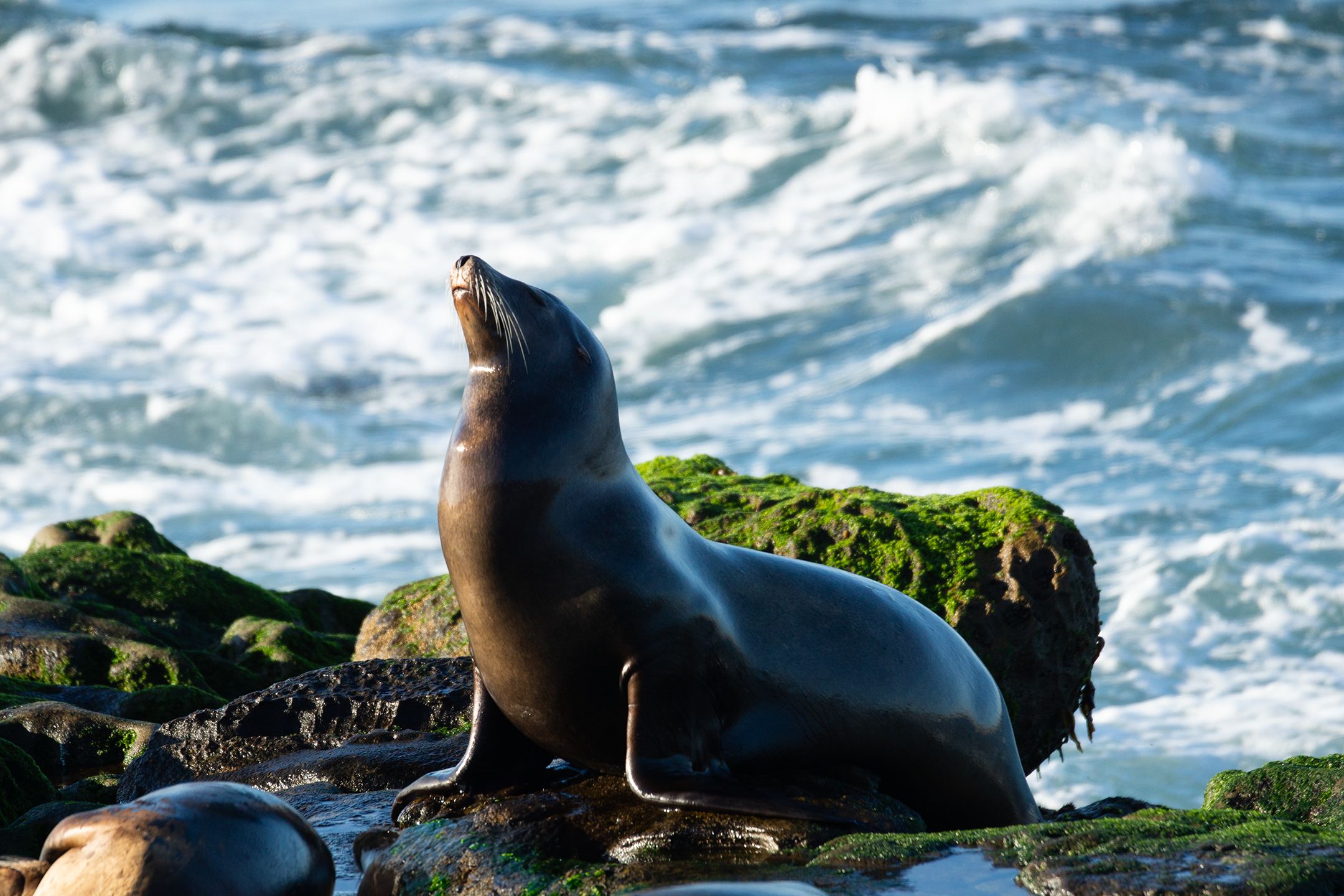
La Jolla Cove and Children’s Pool


Balboa Park
Home to San Diego’s largest attraction that we opted not to visit (the zoo), Balboa Park is a massive public greenspace adjacent to the downtown area. Much of the park is free, and that’s a nice change of pace when you’re still reeling from the sticker shock of California’s gas stations. Our first stop of the day was the cactus and succulent garden.


But Balboa Park is more than gardens and greenspaces. It’s also the place to find many of San Diego’s abundant museums (I just looked it up and there are 18 of them within the park grounds). After our time in the cactus garden, we shrunk ourselves down to 1:48 scale and explored the San Diego Model Railway Museum.


Shorebirds on Shelter Island
We were in San Diego for celebrate a good friend’s wedding, and the venue was located on a small strip of land on the San Diego bay called Shelter Island. It’s about a mile long and just wide enough for a line of hotels and boat launches on one side, a single road down the middle, and park benches looking out to the bay on the other side.
It’s also home to more yachts (and yacht-adjacent services) than anyone needs. And delightfully weird ducks!


Cabrillo National Monument and Tidepools
On our final day on the west coast, we stamped our passport at National Park #2 of the trip: Cabrillo National Monument. The park celebrates Juan Rodriguez Cabrillo, who was the first European to land on the western shores of America back in 1542. There’s also the Old Point Loma lighthouse, which is a very interesting little museum in itself.
But I would be lying to you if I said that we came to Cabrillo for the history.
We came to see the little crabs and the weird critters of the Point Loma Tidepools.


And with Point Loma in the rear view mirror of our tiny rental car, our trip was coming to an end. We made one final adventure to the USA/Mexico border to snag a photo with the nearest “Welcome to California” road-sign, Brittney tried an In-N-Out burger (her review: it was fine), and we boarded our red-eye flight back home.
All photos were shot on a Sony A77 camera. The lenses I used were a Sony 70-400mm ƒ/4-5.6G for the telephoto shots and a Sony 16-50mm ƒ/2.8 DT for the landscapes, model trains, and close-ups at the tidepools.


Leave a Reply to Doug Chapman Cancel reply